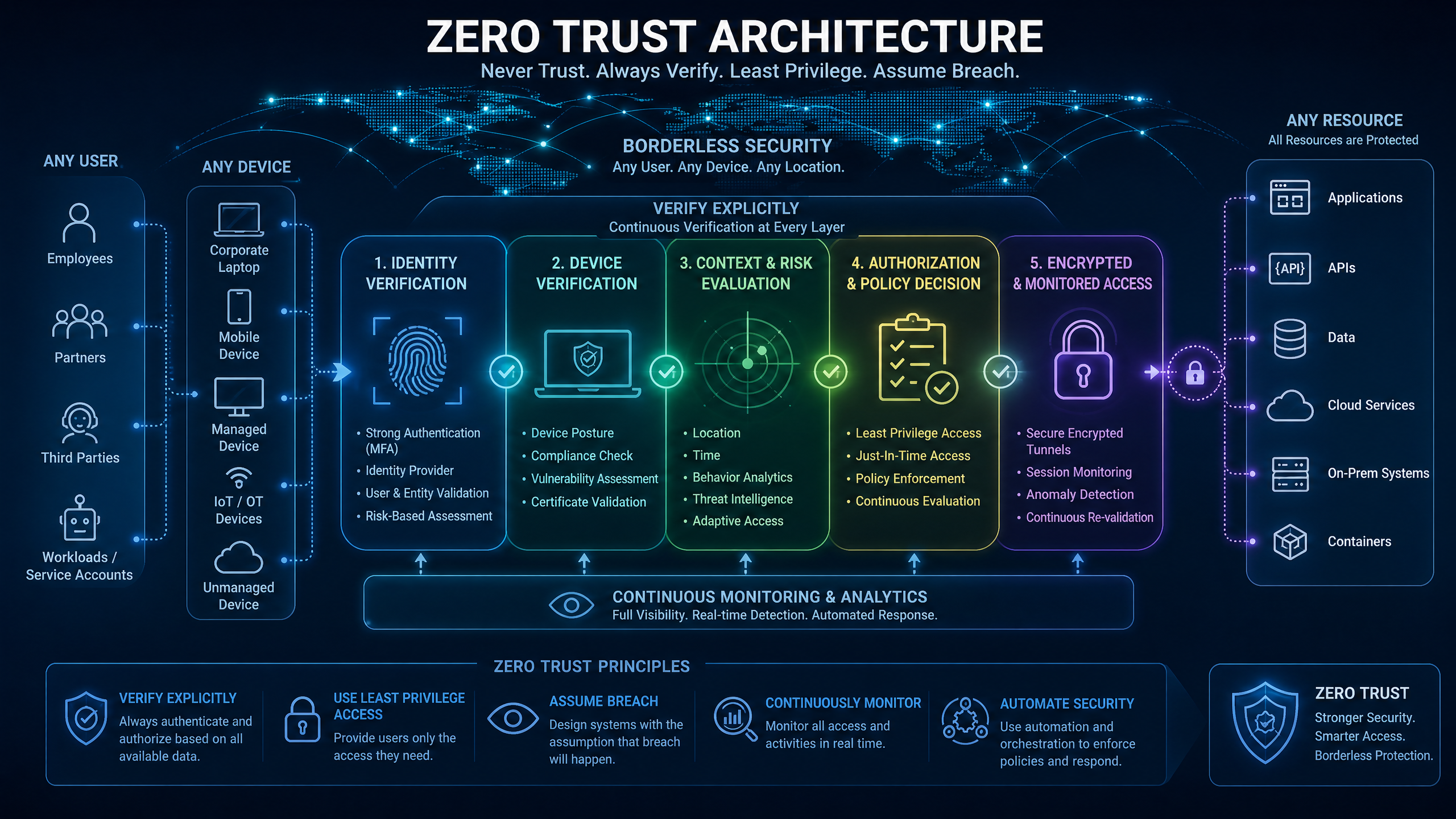
In an era where remote work, cloud computing, and mobile devices have dissolved traditional network perimeters, the old cybersecurity model of “trust but verify” is no longer sufficient. The modern enterprise is borderless, and the threats it faces are increasingly sophisticated. In 2026, Zero Trust Architecture (ZTA) has emerged as the definitive security framework, operating on the principle of “never trust, always verify,” and fundamentally changing how organizations protect their digital assets.
Zero Trust assumes that threats exist both outside and inside the network. It requires strict identity verification for every person and device attempting to access resources on a private network, regardless of whether they are sitting within the corporate office or connecting remotely. This approach minimizes the attack surface by granting access only to the specific applications and data needed for a user’s role, a concept known as least privilege access.
Implementing ZTA involves a comprehensive strategy that integrates various security technologies. Multi-factor authentication (MFA), continuous monitoring, micro-segmentation, and advanced endpoint security are critical components. Micro-segmentation, for instance, divides the network into smaller, isolated zones, preventing lateral movement by attackers if a breach occurs. Continuous monitoring ensures that user behavior and device health are constantly evaluated, allowing for immediate response to any anomalous activity.
The transition to a Zero Trust model is not merely a technological upgrade but a cultural shift. It requires organizations to rethink their security posture, moving away from perimeter-based defenses to a more dynamic, identity-centric approach. This shift is essential for protecting sensitive data, ensuring regulatory compliance, and maintaining business continuity in an increasingly hostile digital environment.
While the implementation of ZTA can be complex and requires significant planning, the benefits are undeniable. It provides a robust defense against modern cyber threats, reduces the risk of data breaches, and enables secure and flexible remote work environments. As the digital landscape continues to evolve, Zero Trust Architecture is no longer an option but a necessity for any organization seeking to secure its future in a borderless world.