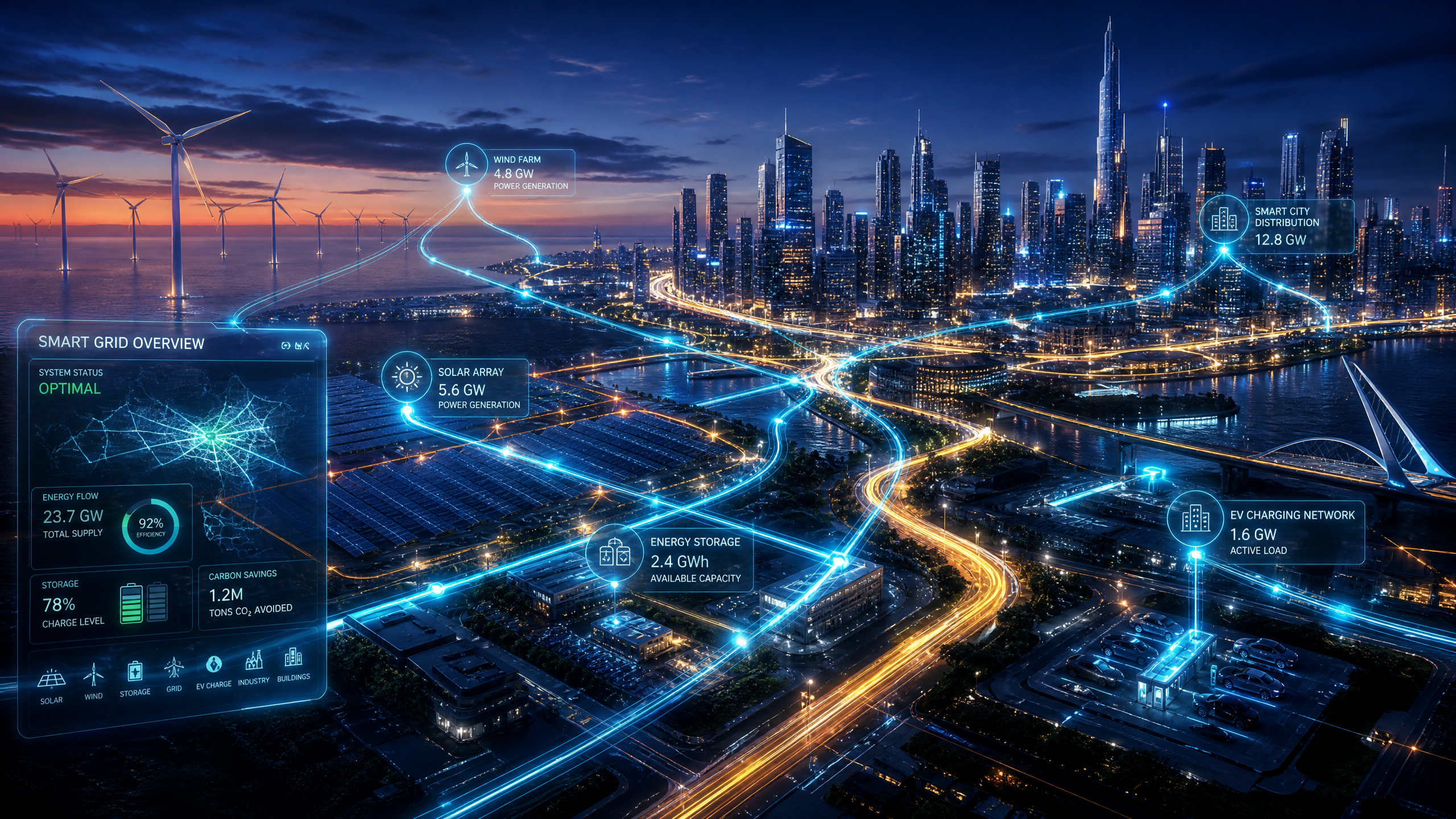
The global energy landscape is in the midst of its most significant transformation since the industrial revolution, driven by the urgent need for decarbonization and energy independence. In 2026, the concept of Electrification 4.0 defines this era, characterized by the widespread adoption of renewable energy sources and the intelligent infrastructure required to manage them. At the heart of this transformation is smart grid leadership, which is actively solving the critical challenge of intermittency inherent in renewables like solar and wind [1].
The integration of a high percentage of intermittent renewable energy into national grids presents a complex balancing act. Smart grids, powered by advanced AI, are the technological backbone enabling this transition. AI algorithms analyze vast streams of data from generation, consumption, and storage points to predict energy supply and demand with unprecedented accuracy. This allows for real-time load balancing, ensuring grid stability and reliability. For example, AI models forecast renewable energy output and consumer demand to optimize energy dispatch, while intelligent systems automatically reroute power or adjust demand-side management programs to maintain equilibrium. Additionally, AI helps identify and isolate grid anomalies, preventing widespread outages and accelerating recovery from disruptions.
Electrification 4.0 is also marked by a significant shift towards decentralized energy resources (DERs), including rooftop solar, battery storage, and electric vehicles, alongside the proliferation of microgrids. These smaller, localized energy systems can operate independently or connect to the main grid, offering enhanced resilience and efficiency. Smart grid leadership is crucial in orchestrating these diverse assets, ensuring their seamless integration and optimal performance. Microgrids provide critical backup power during emergencies and can reduce transmission losses by generating electricity closer to the point of consumption, making them an essential component of the modern energy mix.
Leading the charge in this new energy paradigm requires a blend of technological acumen, strategic foresight, and a deep commitment to sustainability. Energy leaders are tasked with prioritizing research and development in advanced grid technologies, energy storage solutions, and AI applications. They must also collaborate with policymakers to create regulatory frameworks that support smart grid development and renewable energy integration. Furthermore, educating consumers and stakeholders about the benefits and operational aspects of a smart, sustainable energy system is vital for building a resilient, inclusive future that meets the growing demands of an electrified world while minimizing environmental impact.
Smart grid leadership is the linchpin of Electrification 4.0, transforming the intermittency challenge of renewables into an opportunity for innovation and resilience. By harnessing AI-powered systems, embracing decentralized energy models, and demonstrating unwavering commitment to sustainability, leaders in the energy sector are forging a new blueprint for a cleaner, more reliable, and ultimately more sustainable global power infrastructure in 2026 and beyond.
References
[1] Energy World Congress. (2026). Top-Ranked Renewable Energy Conferences 2026.
https://www.energyworldcongress.com/